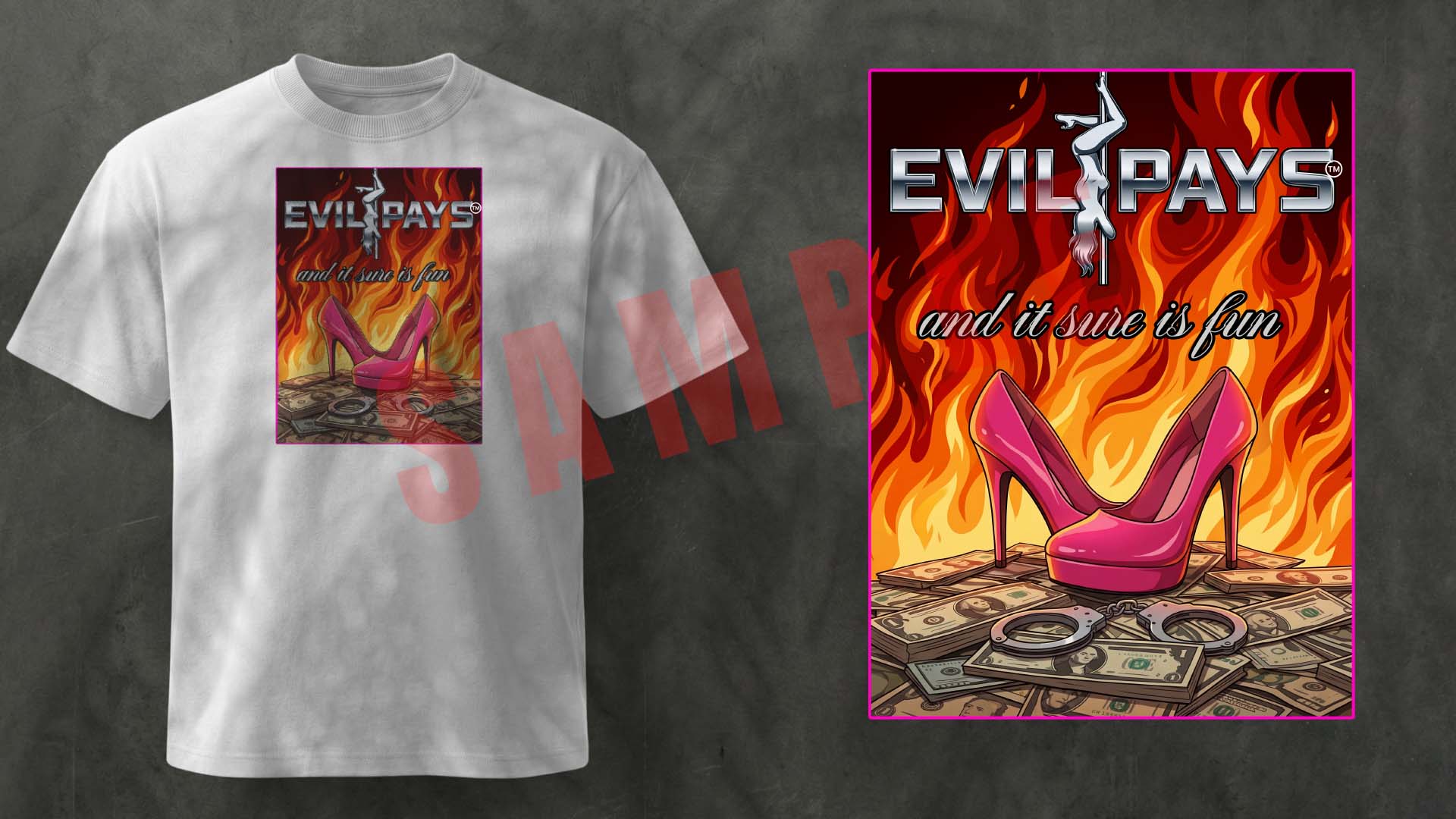
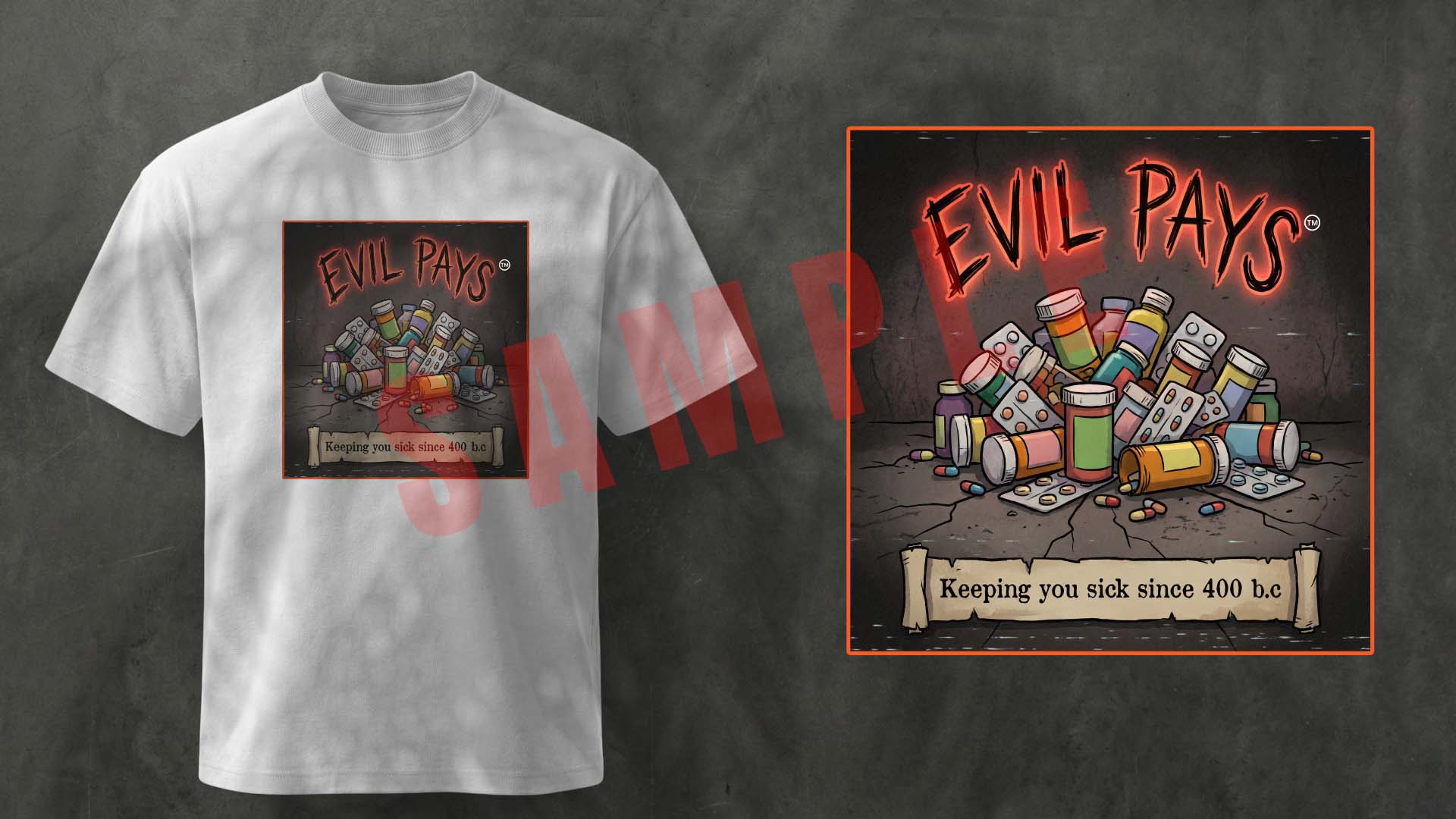
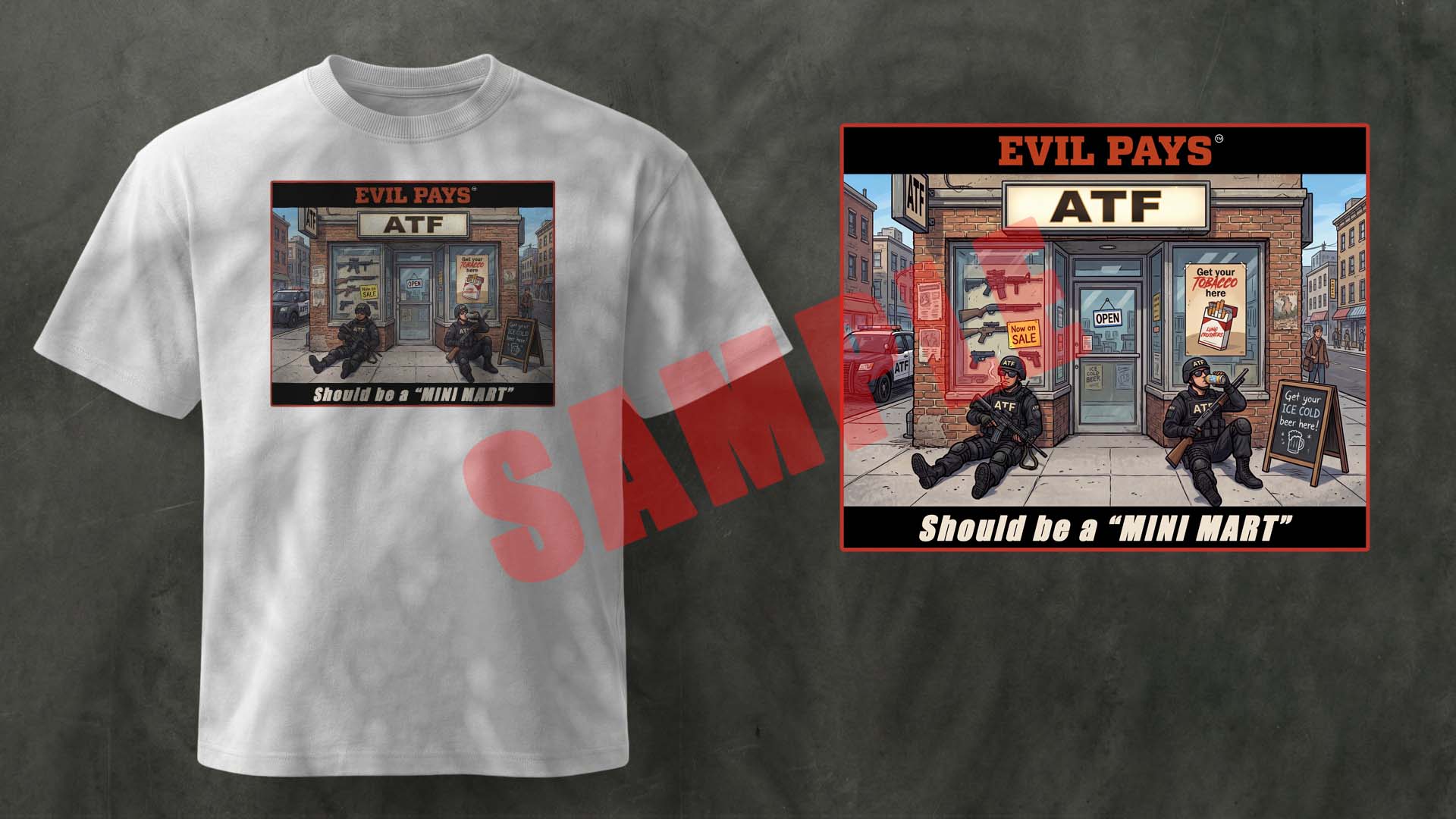
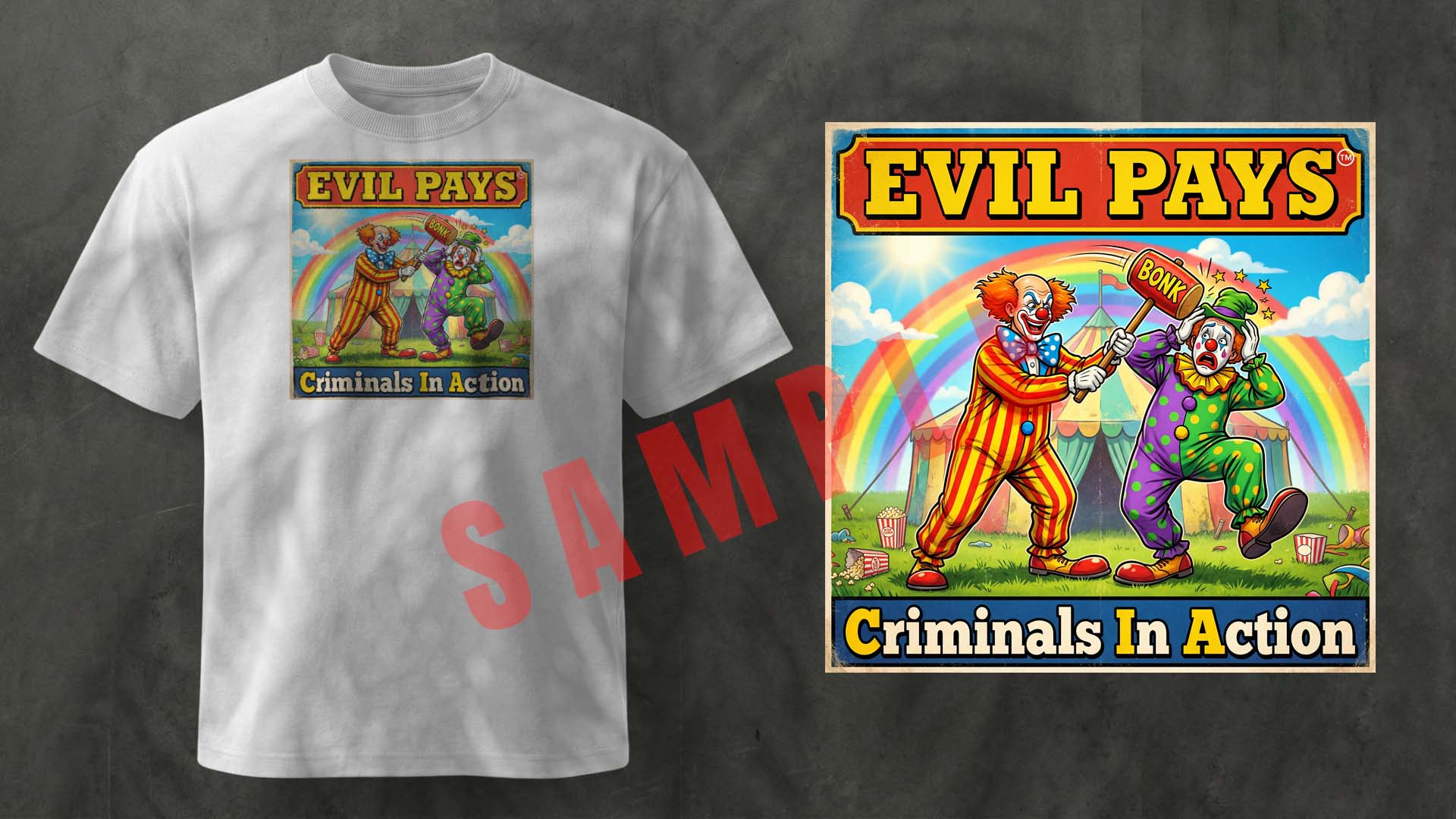
OUR SHIRTS

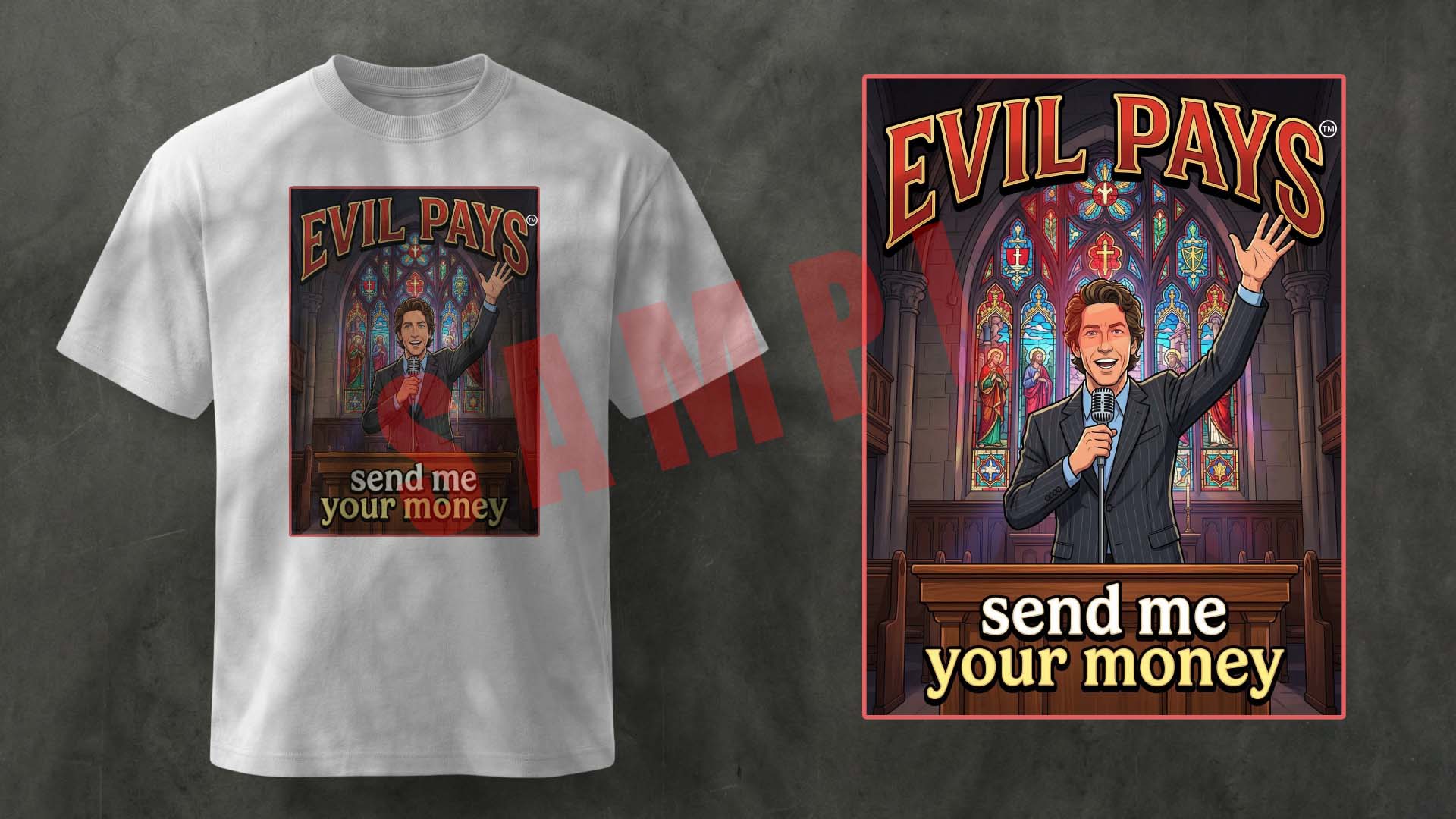
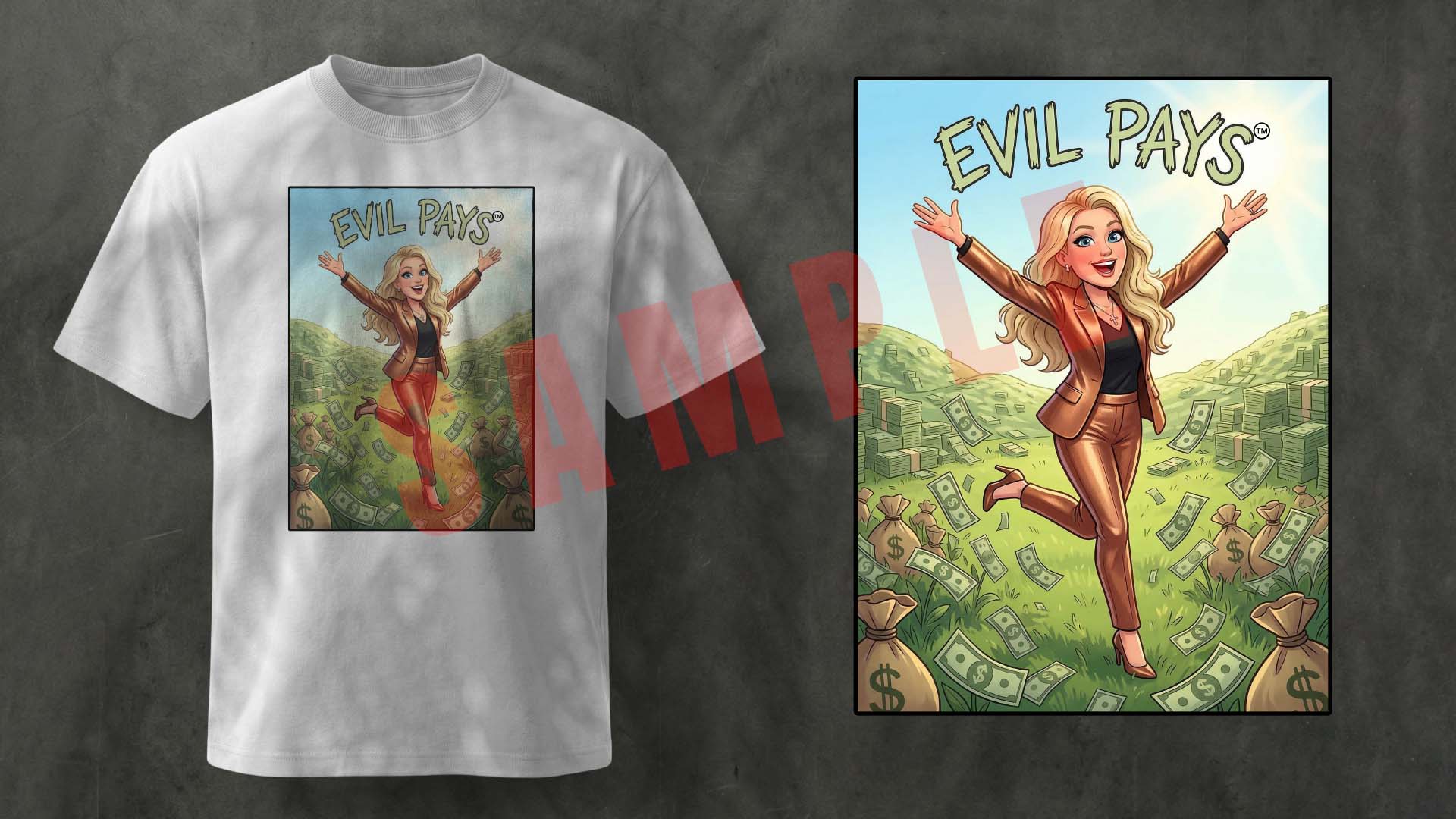
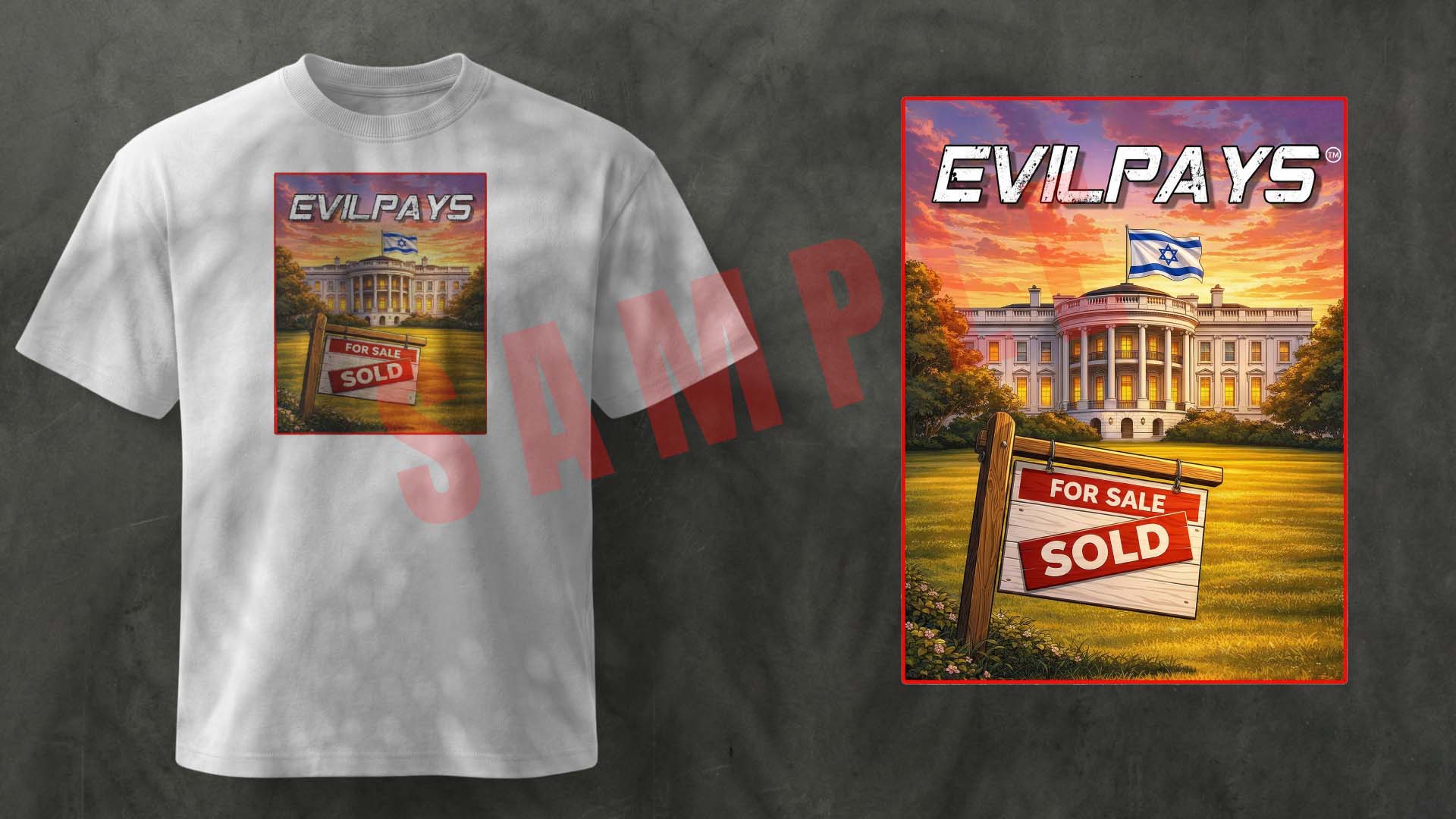
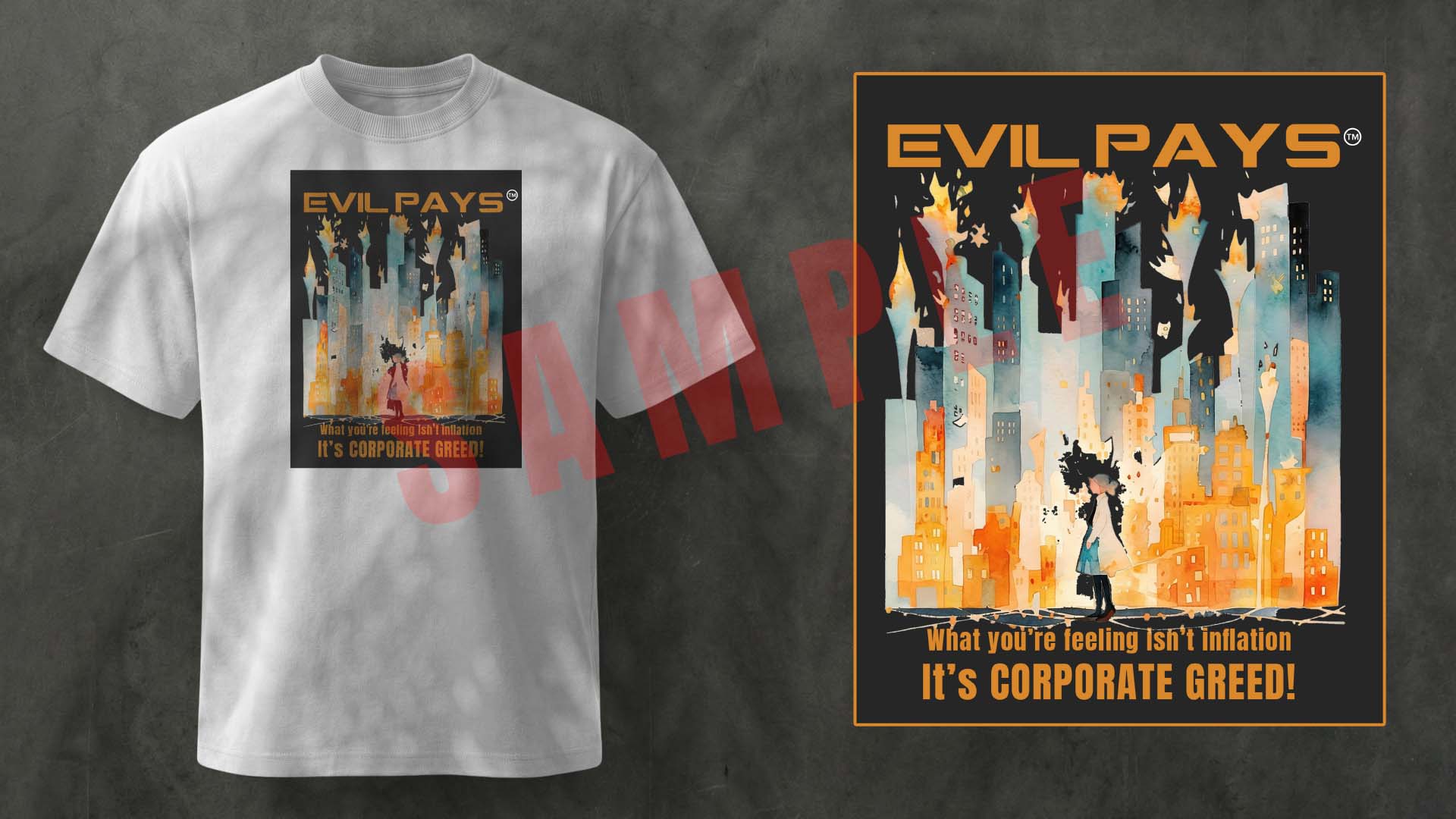
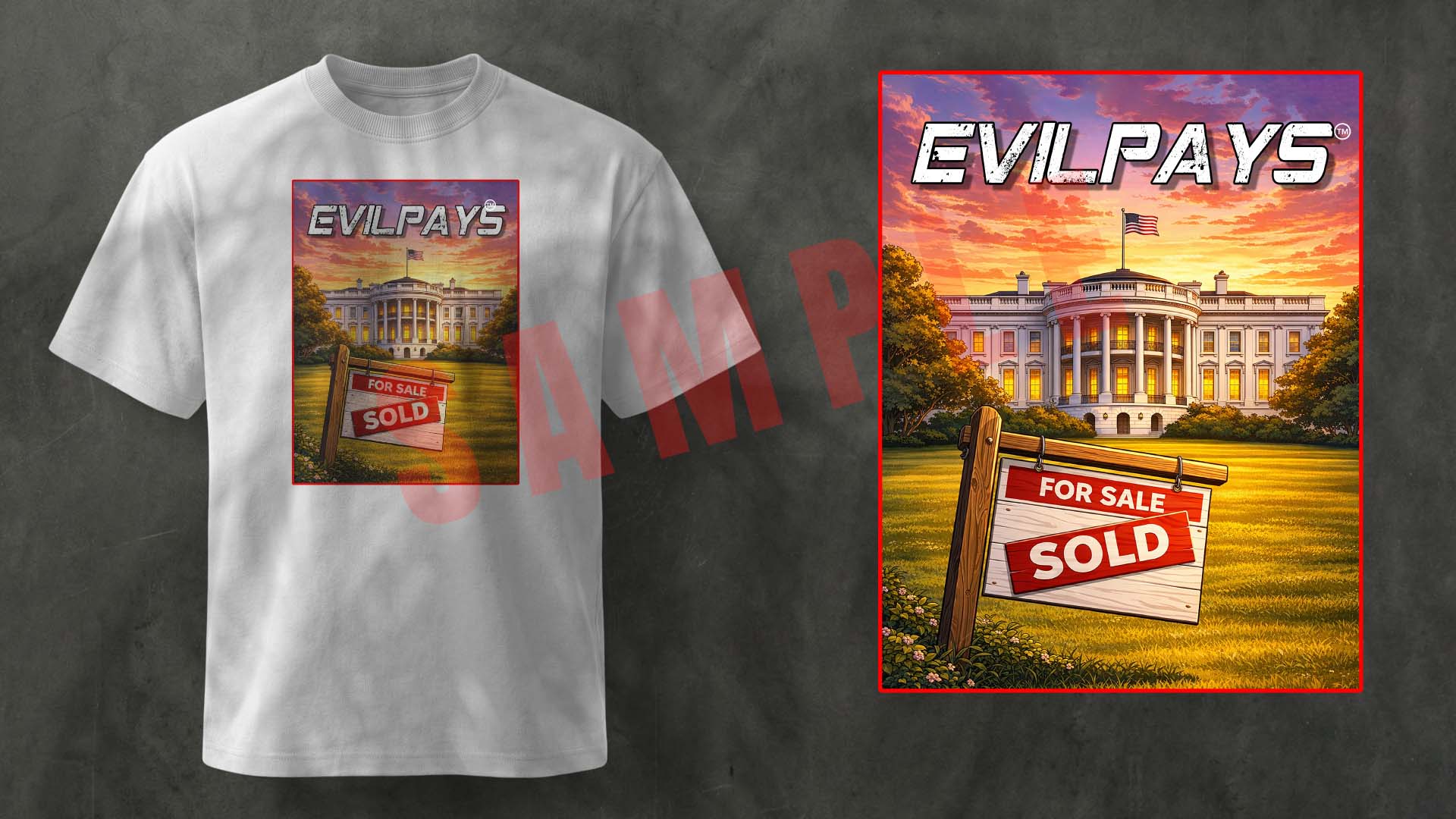
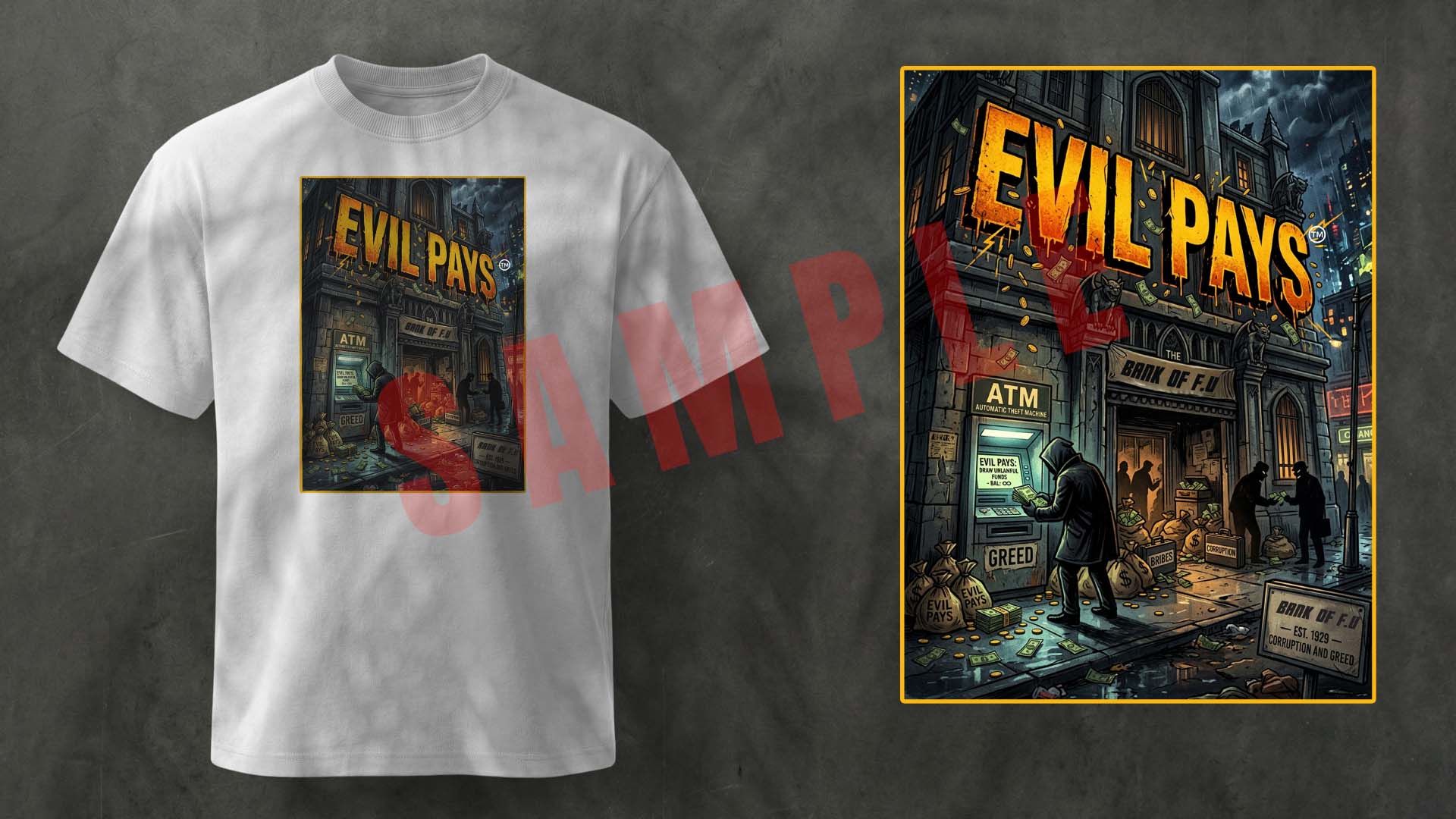
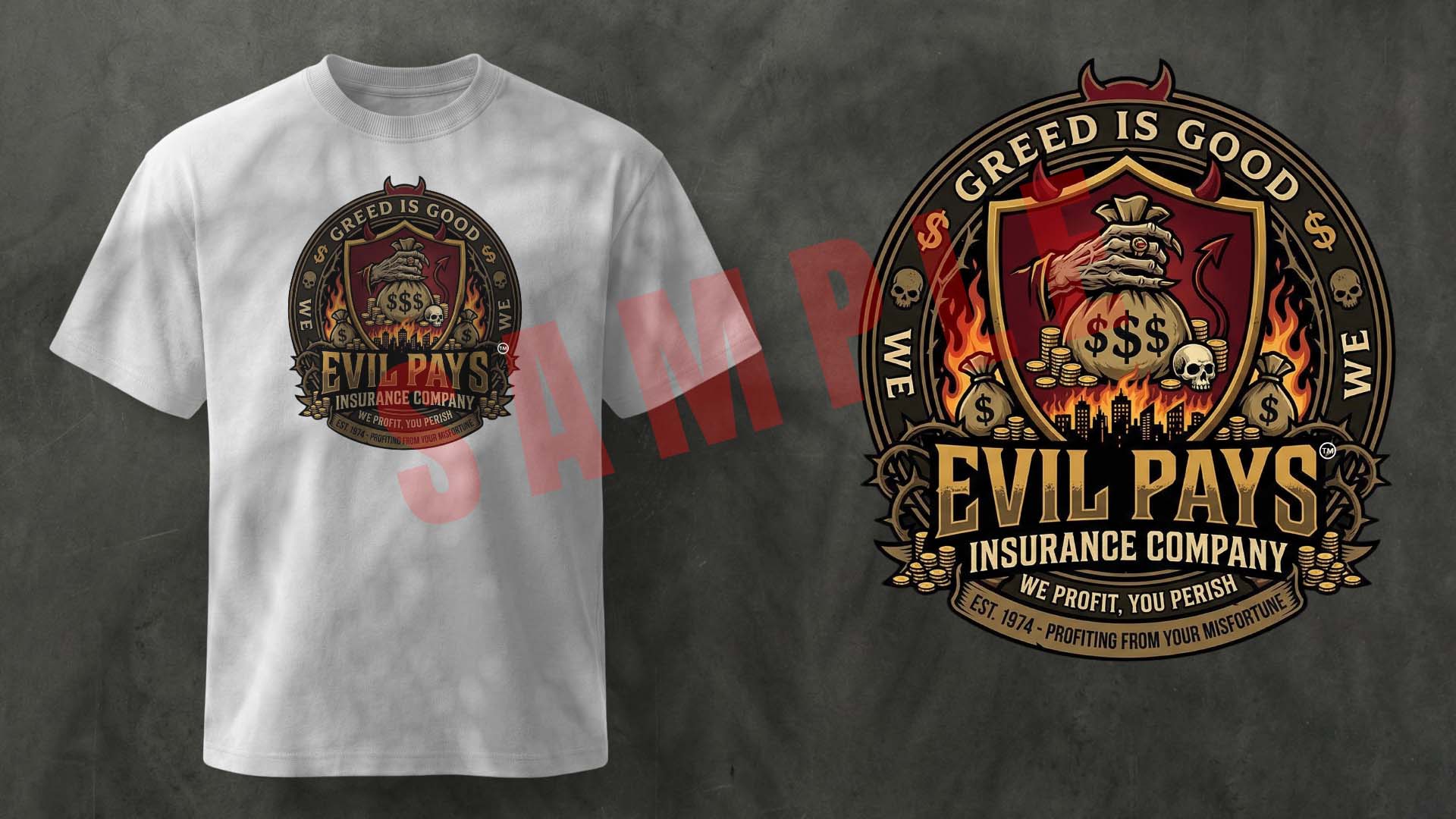
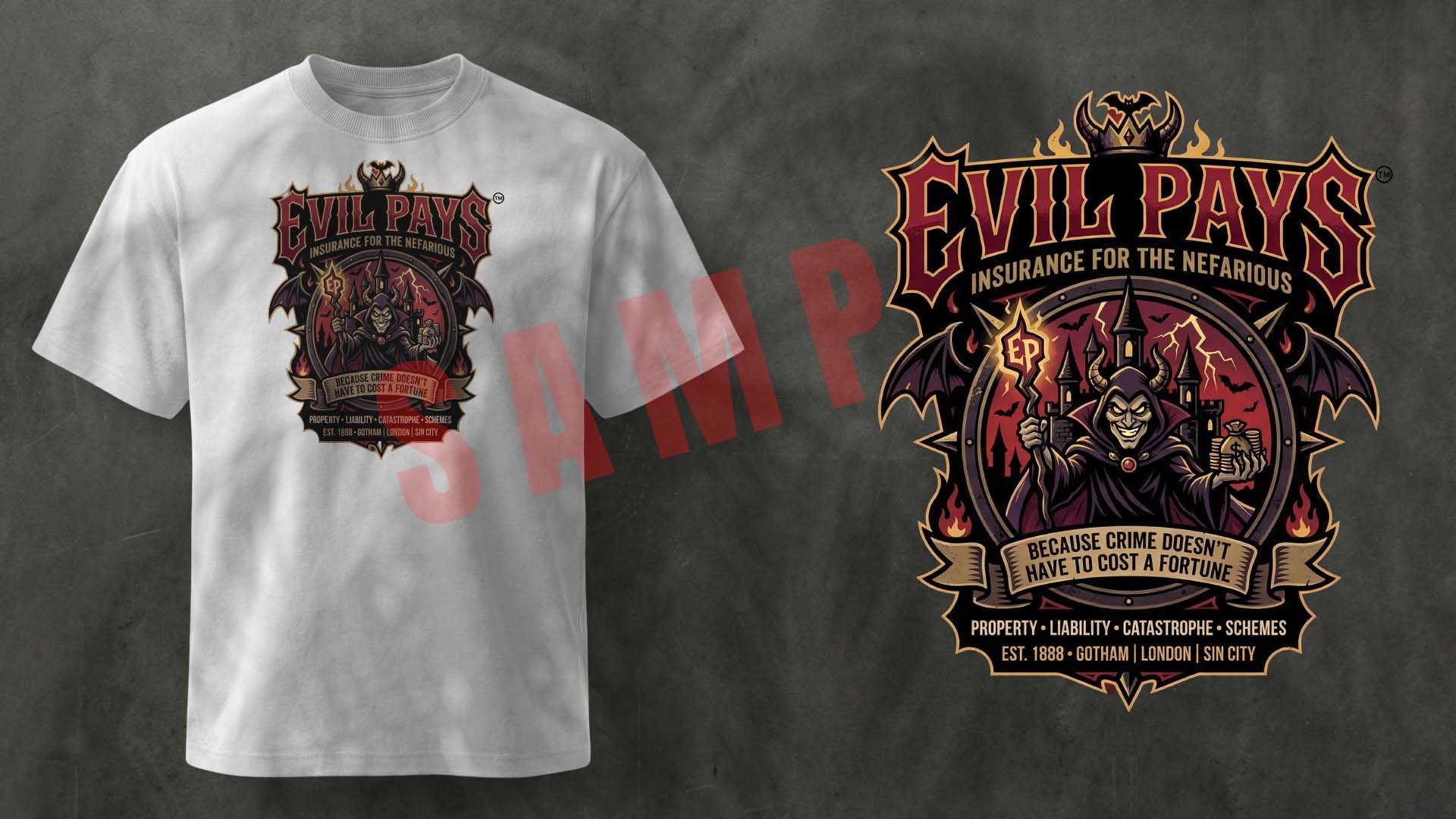
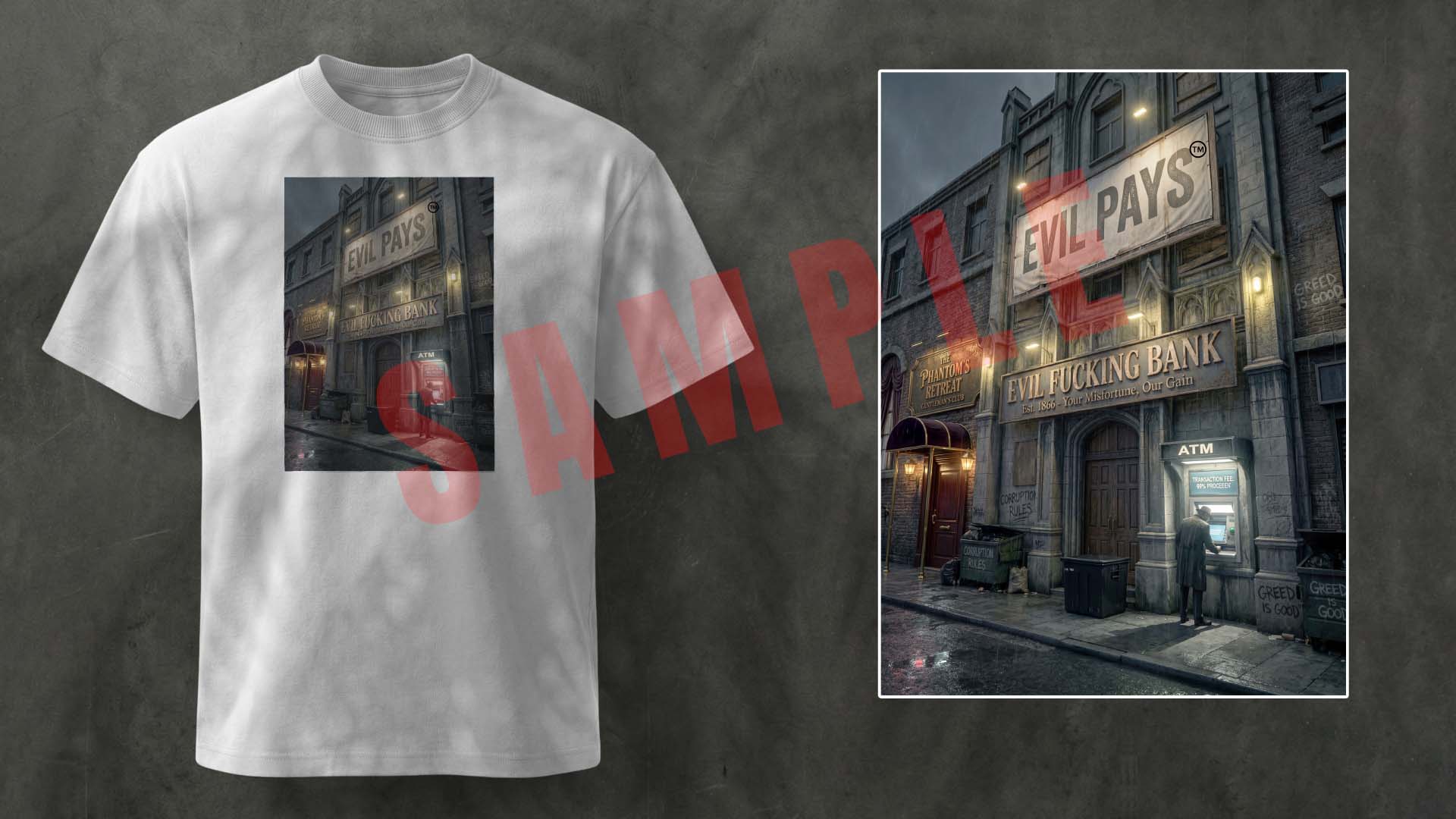
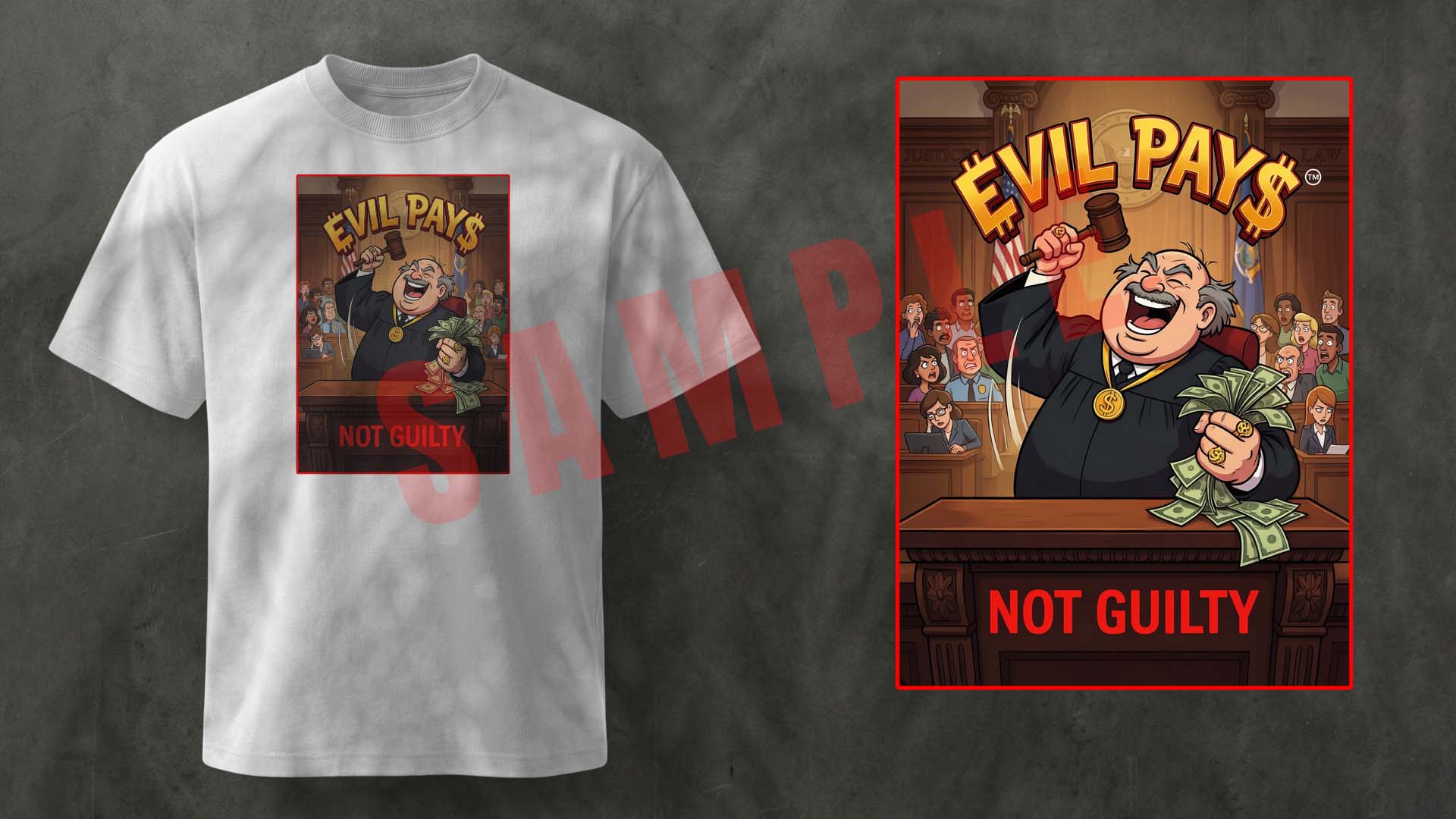
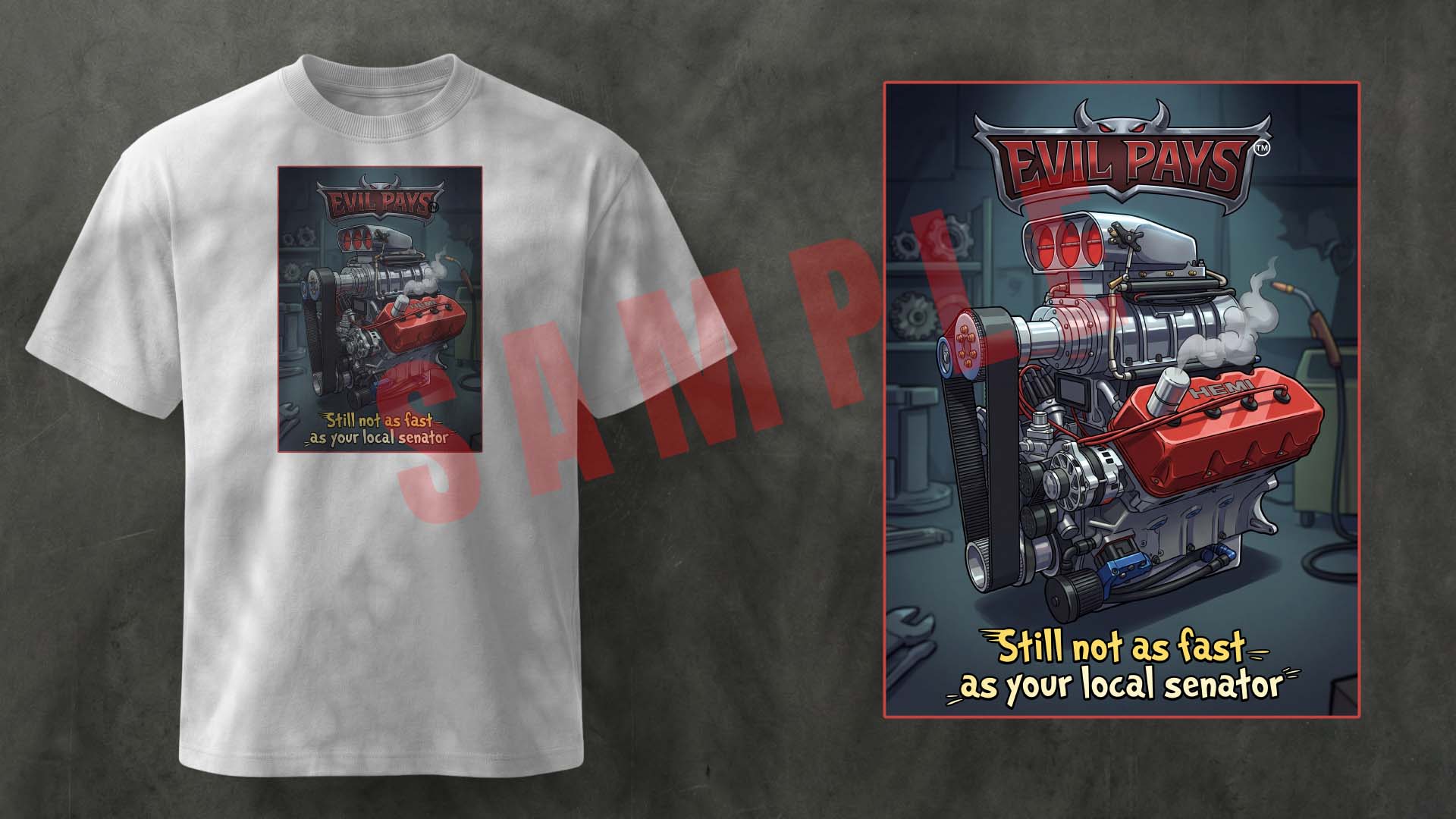
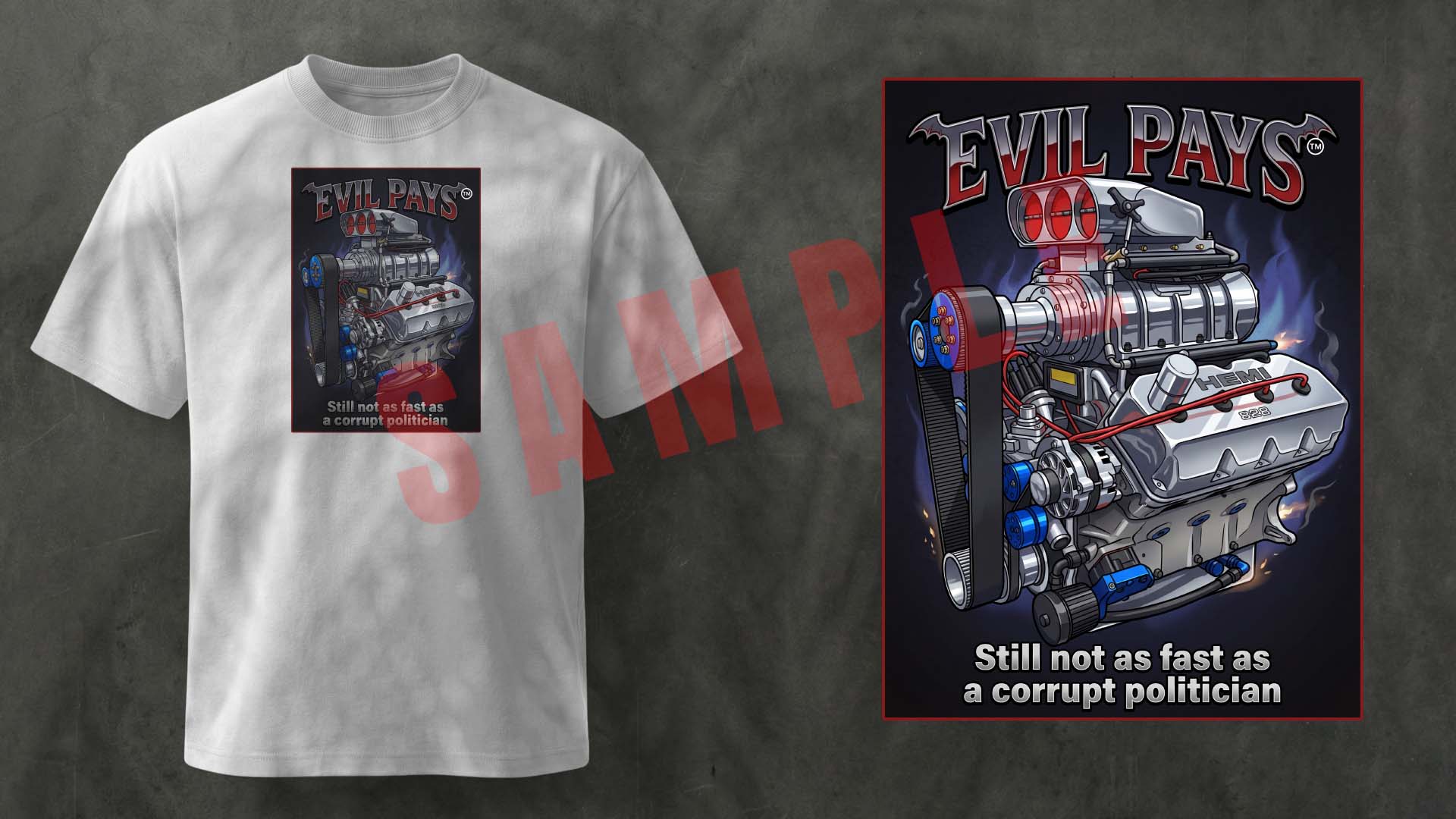
Custom t-shirts inspired by the worst scandals in modern history. Wear the truth. Look damn good doing it.
Each piece tells a story they don't want you wearing.
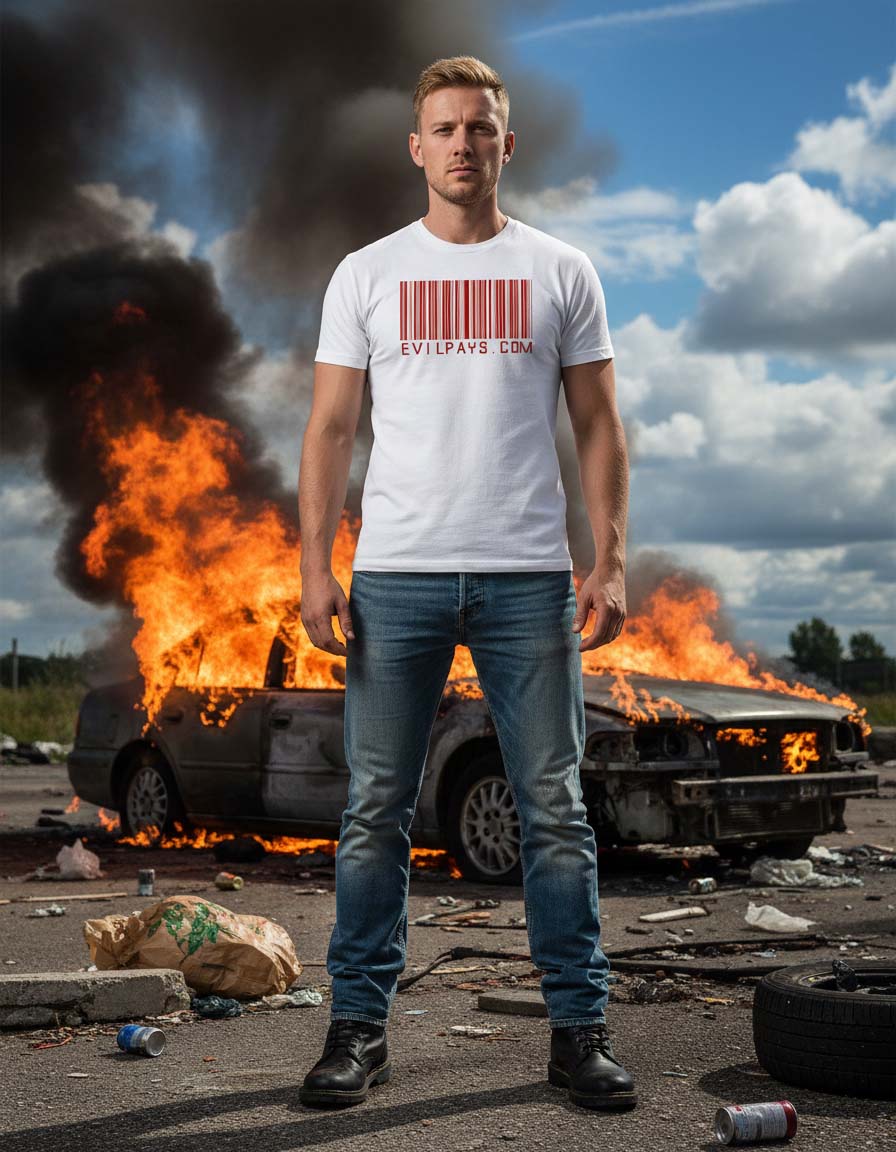
The barcode was invented in 1949. Some people think barcodes are “evil” mostly because of conspiracy theories rather than any real evidence. The idea often comes from misinterpretations of religious texts - especially the “mark of the beast” mentioned in the Book of Revelation - where some claim that barcodes (or the numbers within them, like 666) are a hidden symbol of control or evil. In reality, barcodes like the Universal Product Code are just practical tools for identifying products and tracking inventory. Concerns also sometimes stem from broader fears about surveillance, automation, or loss of privacy, but barcodes themselves don’t store personal data or track individuals—they simply encode product information to make commerce faster and more accurate. SO THEY TELL US!
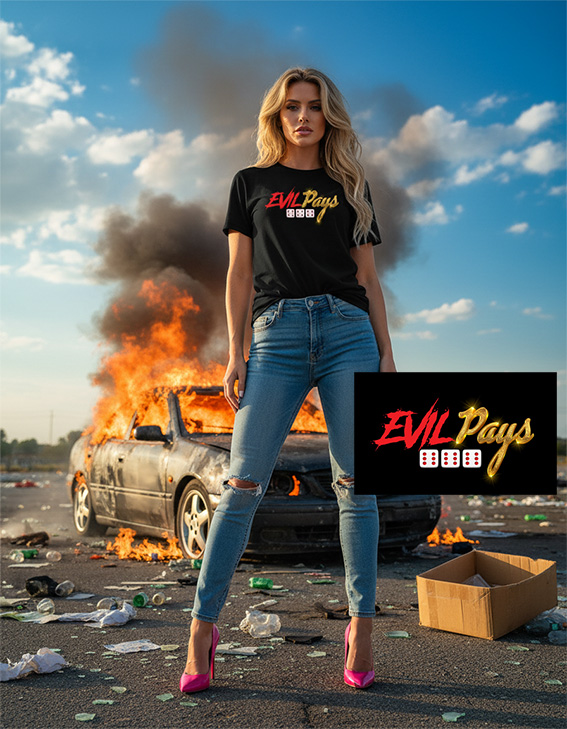
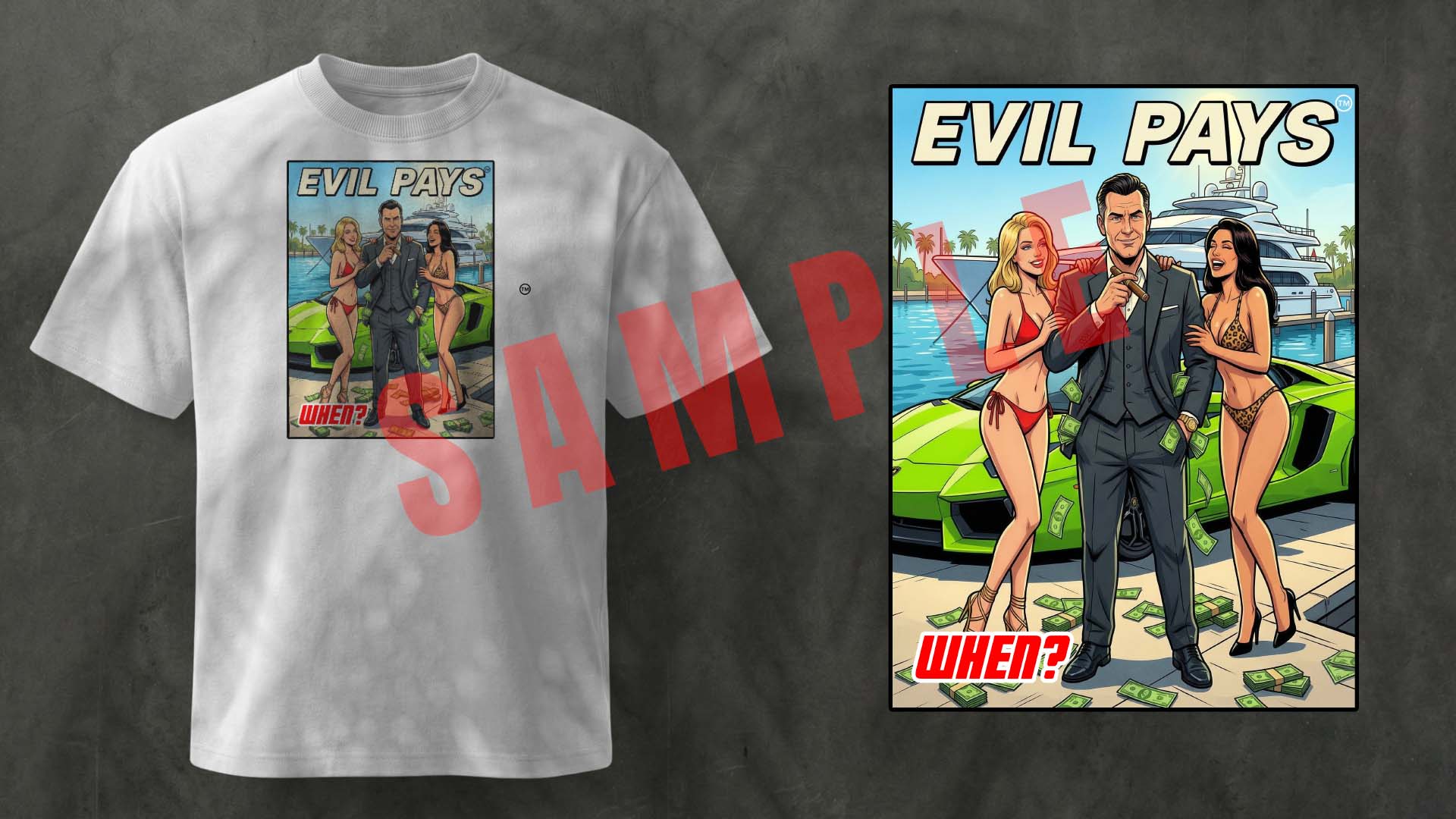
Some people think Las Vegas is “evil” because it’s closely associated with behaviors that certain moral or religious perspectives discourage - especially gambling, heavy drinking, and adult entertainment, which are central to the city’s image and economy; critics often connect these activities to ideas about vice, temptation, and excess, sometimes referencing concepts like sin found in texts such as the Bible, while others point to the city’s history of organized crime influence in its early casino industry as adding to its reputation, even though today Las Vegas is also a mainstream tourist destination known for shows, dining, and entertainment beyond those stereotypes. But if you think your gonna win big...THINK AGAIN. Your gonna need more than "lucky dice to win big in this town.
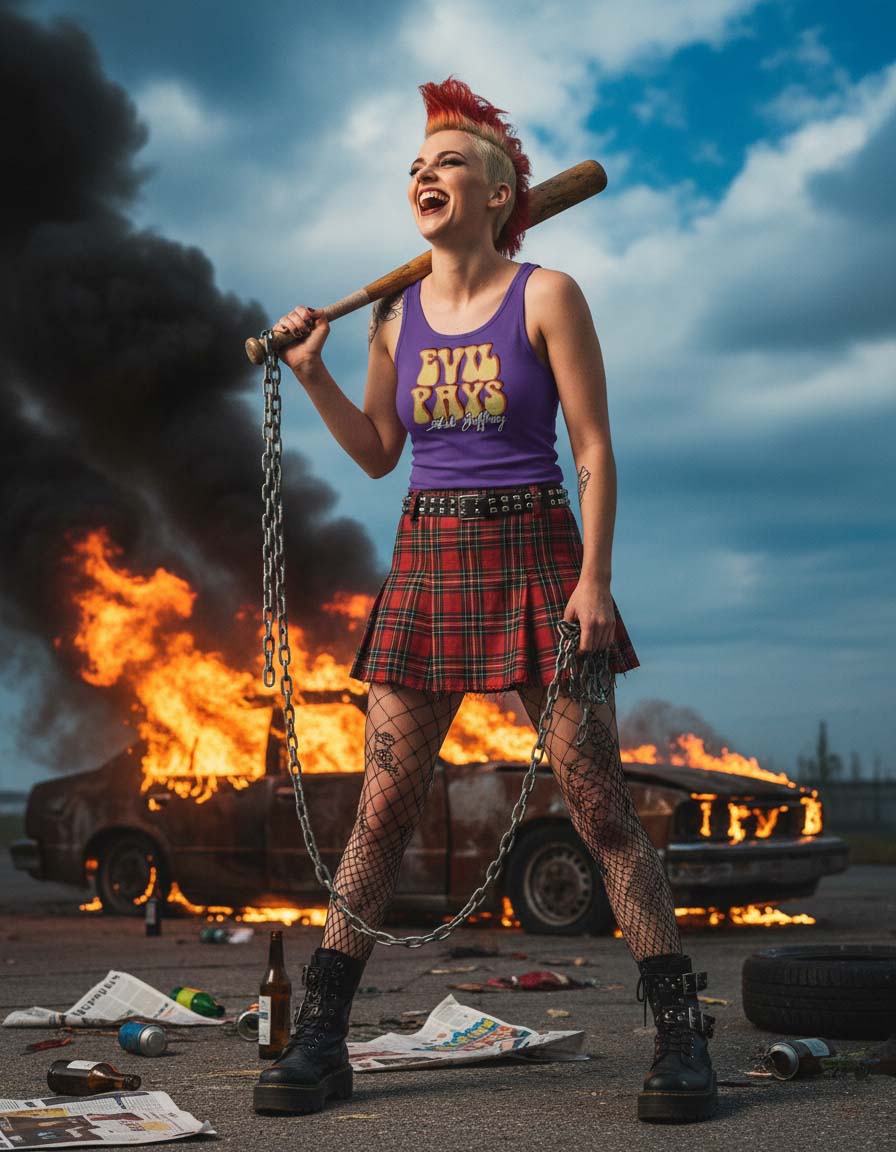
Anarchy and corruption are often linked in public perception because when a society lacks a stable governing authority, systems of accountability can weaken, creating opportunities for individuals or groups to exploit power for personal gain; however, in the academic field of Political Philosophy, anarchy doesn’t necessarily mean chaos but rather the absence of centralized rule, which some theorists argue could reduce corruption by eliminating concentrations of power that invite abuse, while others contend that without formal institutions, informal power structures can emerge and become even more opaque and unregulated, potentially leading to different forms of corruption rather than eliminating it altogether.
What started as something that might sound almost unbelievable, maybe even a little amusing at first it quickly turned into one of the most devastating experiences of our lives.
Back in 2011, my partner (now my wife) and I took a leap. We had a wild idea: to put on a concert in a place where concerts simply weren’t meant to happen. We won’t name names or locations for legal reasons, but just know it was bold, risky, and completely outside the norm. And somehow… we pulled it off.
We secured the location. We lined up the bands. We poured everything we had time, money, energy and everything we had into making it real. We promoted it relentlessly, hoping people would take a chance on something different.
Then the day came.
Against all odds, the event actually worked. It happened. People showed up. And for those who couldn’t be there in person, we offered a livestream for just $1.99. Now this was before YOUTUBE and FACEBOOK even offered streaming services. Plus we did this on a dial up connection...LOL
When it was all over, exhausted but hopeful, we went back to the office to see how we did.
What we saw left us speechless. 7.5 million viewers. 7.5 million people had tuned in. We couldn’t believe it. It felt like everything we had worked for had finally paid off. This was it, the moment that would change our lives. Then we checked the account. $0 Nothing. At first, it didn’t make sense. It had to be a mistake… right? But it wasn’t. The company handling our payment processing had decided without warning, without a single phone call, without even attempting to contact us, that our event must have been a scam. The volume, they said, was “too unusual.” The activity was “too erratic.”
So they refunded every single payment. Just like that.
This was 2011, systems weren’t as advanced, protections weren’t as clear, but none of that changes what happened next. We reached out. We fought for answers. We were met with cold explanations and closed doors. To challenge this legally, we had to find some top tier lawyers. The reality was brutal: it would take millions just to begin a fight we might never win. When hit with the truth, it was over. We didn’t just lose a payment. We lost $15 million.
Money we earned. Money people willingly paid. Money that vanished overnight, money taken out of our hands without consent, without due process, without justice.
And to this day, that company still exists. It’s changed hands, shifted faces, rebranded and the machine keeps running. The people behind it? Still out there, still profiting, still untouched. Meanwhile, we were left to pick up the pieces.
This isn’t just a story about business. It’s about what happens when ordinary people go up against systems too powerful to challenge. It’s about what it feels like to build something real, then only to have it taken away in an instant. We’re sharing this not just to tell our story, but because we’re still fighting to recover from it. And we can’t do it alone.
We know there are thousands of stories just like this out there...and we feel you.
Every design is ripped from real scandals that shook the world. We put the truth on your chest.
You know it's funny how some of the worst acts
of corruption are often overlooked & ignored.
There is nothing wrong with cashing in on a little humor,
besides, we're not charging your 401K prices!!!
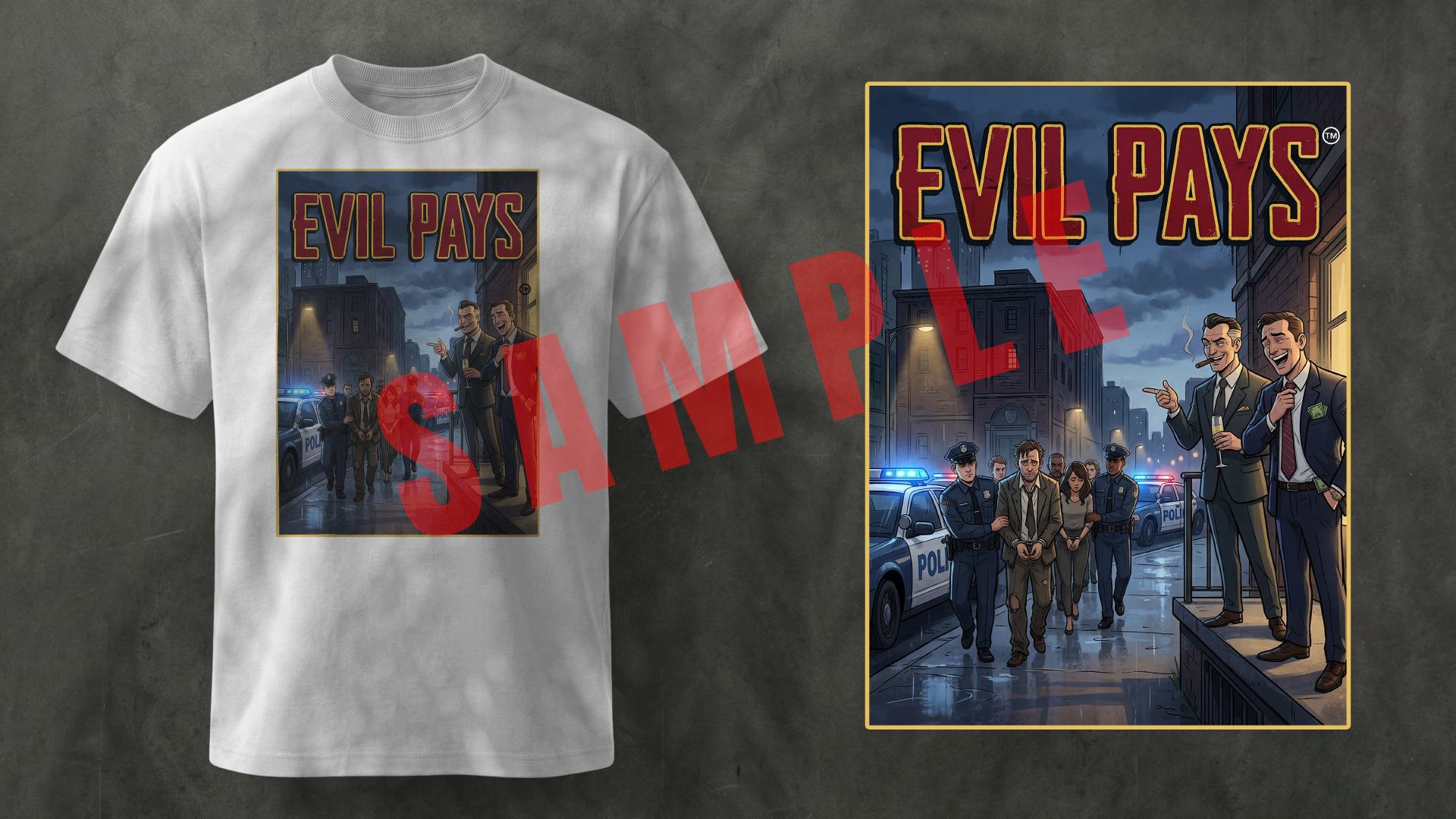
In the United States, some of the most infamous financial scandals have revealed how long corruption can go unchecked before consequences arrive—or, in some cases, how key players avoid the full weight of accountability. Bernard Madoff orchestrated one of the largest Ponzi schemes in history, defrauding investors of tens of billions of dollars over decades before finally being caught; while he was imprisoned, many critics argue others who enabled or overlooked the fraud escaped serious punishment.
Similarly, executives tied to the collapse of Lehman Brothers and the broader 2008 financial crisis were widely blamed for reckless and deceptive practices that devastated the economy, yet very few faced criminal charges. Figures like Allen Stanford and Jeffrey Epstein also illustrate how wealth and connections can delay justice—Stanford ran a massive fraud for years before conviction, while Epstein avoided severe consequences in earlier cases before later prosecution.
These examples highlight a persistent criticism in American society: that complex financial systems, legal loopholes, and influence can allow powerful individuals to operate with relative impunity, even when the damage to ordinary people is enormous.
Our t-shirts are all about fun, laughs, and maybe a little “did they really just say that?” energy. Now, just to be clear - we absolutely don’t support corruption, money laundering, or scamming in any form or manner (not even a tiny bit). But come on… when it sometimes feels like “the bigger the crime, the lighter the slap on the wrist,” how could we not poke a little fun at it?